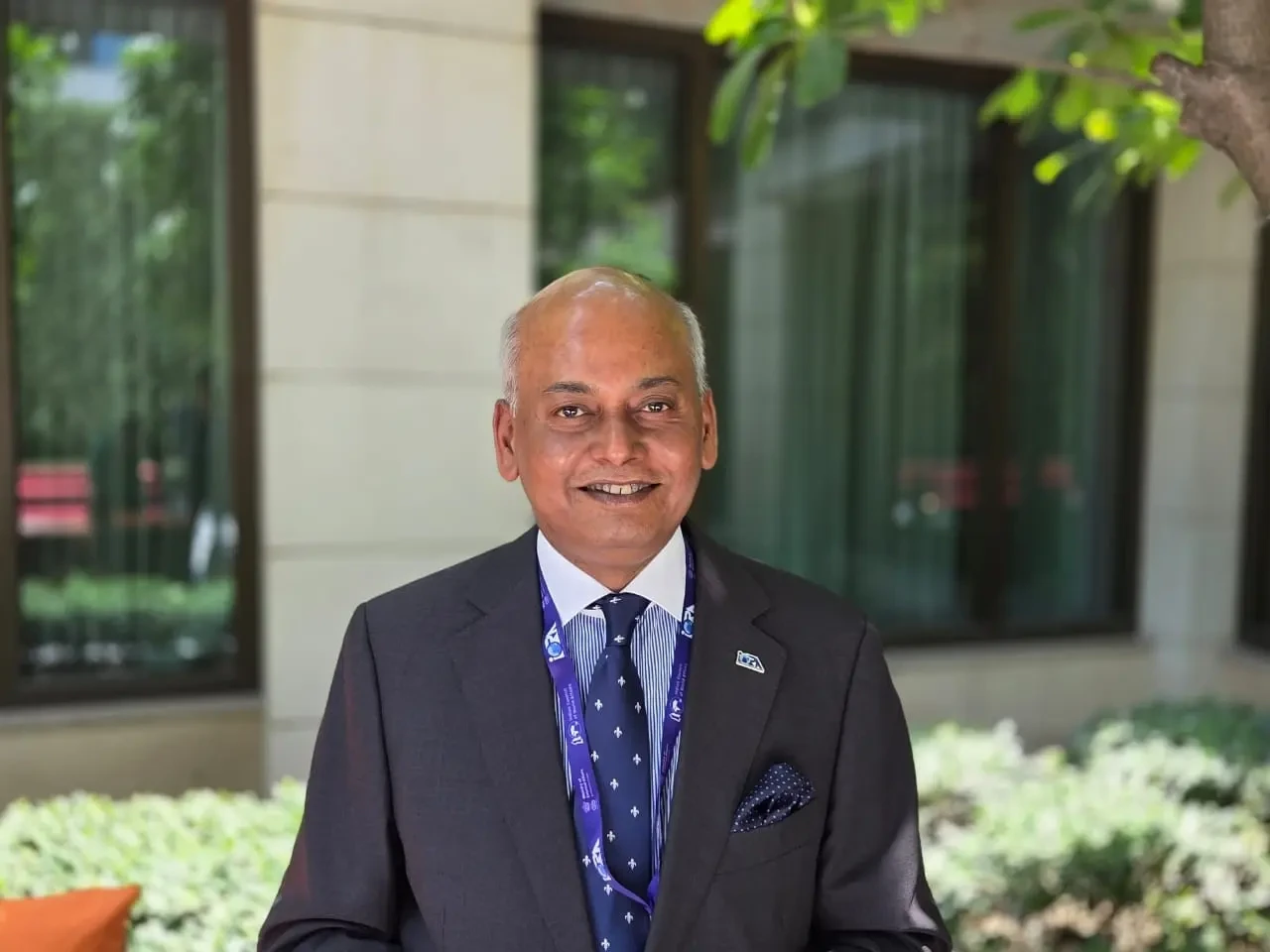

Senior officials, experts and academics from across the Indian Ocean gathered in the Indian capital this week for the 10th Indian Ocean Dialogue, where the region's top diplomat warned of growing threats to maritime safety and energy security.
The two-day event, hosted by the Indian Council of World Affairs (ICWA) in partnership with India's Ministry of External Affairs and the Indian Ocean Rim Association (IORA), focused on the theme "Indian Ocean Region in a Transforming World".
Speaking to WION's Sidhant Sibal, Indian Ocean Rim Association (IORA) Secretary-General Sanjiv Ranjan stressed the forum's unique value as the only organisation bringing together all 23 rim countries.
"We are the only organization in the region which brings together 23 member states from all the Indian Ocean, countries which are in the rim of the Indian Ocean," he said. "That in itself is a value which provides a platform for member states to deliberate and articulate their concerns and their interests."
Ranjan highlighted "huge concern" over disruptions to sea transport, which he said directly threaten energy security. "The impact of disruptions of transport linkages in the region directly affects the energy security of these nations," he said.
"These nations have taken mitigation measures, but they know that restoration of status quo ante is very important to ensure that the well-being of their societies, their people, is maintained."
Hostage crisis unfolds in Germany after armed bank robbery
Speakers repeatedly emphasised adherence to international law, particularly the United Nations Convention on the Law of the Sea (UNCLOS). Practical ideas floated included joint search-and-rescue exercises, humanitarian assistance and disaster relief drills, and greater use of space-based monitoring for climate challenges. The dialogue comes weeks after the IRIS Dena incident, in which an Iranian frigate was sunk by a US submarine off Sri Lanka in March, raising questions about freedom of navigation and security in busy sea lanes.
IORA has no mandate to discuss specific geopolitical flashpoints, but Ranjan acknowledged the broader worries. "When we talk about adherence to international law, it means every nation commits itself to following those laws in its practice on the ground," he said. Concerns about how such incidents affect shipping, navies and coastal communities "is very much a part of the agenda".
The Track 1.5 format deliberately mixes government voices with those of academics and experts from countries including Sri Lanka and Mauritius, allowing candid exchanges outside formal diplomacy. Deliberations will feed into a senior officials' meeting in India next month and culminate in a consensus document to be made public.
India, the current chair of IORA until 2027, has used its tenure to push themes of innovation, openness, resilience and adaptability under its MAHASAGAR vision. Ranjan said the dialogue helps member states reach "convergences on issues which have a coherence within the organisation".